BES Insights page 2 of 3

Explore practical insights and leadership perspectives from BES on talent strategy, organizational performance, and future-ready teams.

All Posts

  • Industry Trends/Jason Murray

    Reading the Room: How Chairs Steer Committees Toward Stronger Hires

    In this article, Jason Murray explores the nuanced dynamics that can shape hiring outcomes when search committees are involved. He outlines practical strategies for Hiring Managers and Committee Chairs to cultivate structure, promote balanced participation, and avoid common pitfalls. Drawing from years of experience in executive search, Jason offers tools to help leaders ‘read the room’ and ensure that decision-making processes lead to thoughtful, equitable, and successful hires.

    Read Reading the Room: How Chairs Steer Committees Toward Stronger Hires
  • Industry Trends/Chad Lawrence

    Redefining Work: Navigating Hybrid Models in a Post-Pandemic World

    The hybrid work model has emerged as a transformative response to the evolving demands of the modern workplace, blending flexibility with operational goals to redefine how and where work gets done. By offering employees autonomy while fostering inclusivity, hybrid work enhances job satisfaction, supports diverse needs, and helps attract and retain top talent. However, its success depends on intentional strategies that address equity, engagement, and collaboration challenges. Organizations that embrace hybrid work as more than a logistical solution—embedding Equity, Diversity, Inclusion, and Accessibility (EDIA) principles and prioritizing connection and purpose—can cultivate resilient, high-performing teams and a thriving workplace culture fit for the future of work.

    Read Redefining Work: Navigating Hybrid Models in a Post-Pandemic World
  • Future of Work/Sarah Khan

    The Importance of Connection and Transformational Relationships: A Reflection

    Modern workplaces often prioritize efficiency and output, reducing interactions to transactional exchanges that leave employees feeling undervalued and disconnected. This approach stifles creativity, erodes trust, and limits team potential. Transformational relationships, built on trust, reciprocity, and shared purpose, offer a compelling alternative. These relationships foster collaboration, engagement, and innovation, creating environments where employees feel valued for who they are, not just what they do. By shifting from transactional to transformational dynamics, leaders can unlock their teams’ full potential, cultivating workplaces that thrive on connection, inclusivity, and shared success. Prioritizing the human side of work is not just a choice—it’s essential for a sustainable and empowered future.

    Read The Importance of Connection and Transformational Relationships: A Reflection
  • Future of Work/Urmilla Mahabirsingh

    Bringing People Along: Human-Centred Leadership in the Age of AI

    In this article, Urmilla Mahabirsingh reflects on the responsibility of HR leaders to guide ethical decision-making in an era where AI is advancing faster than regulation or public understanding. She explores the risks of using AI without proper oversight, the need to actively prevent bias, and the emotional toll of accelerated digital workplaces. She highlights the importance of designing inclusive systems that bring everyone along. The article calls on HR professionals to protect trust, fairness, and human dignity as technology reshapes the future of work.

    Read Bringing People Along: Human-Centred Leadership in the Age of AI
  • Industry Trends/Jason Murray

    Beyond the Org Chart (Part II): The Critical Questions Leaders Must Ask During Onboarding

    Effective leadership begins with questions, not answers. In Part I, we explored how new leaders can build trust and uncover hidden dynamics by asking who truly holds influence and what people are afraid to say. In Part II, we turn to questions that help leaders align with the organization’s true definition of success, understand the legacies they inherit, and lead with intention. These questions are essential for building credibility, advancing inclusion, and laying the foundation for sustainable leadership.

    Read Beyond the Org Chart (Part II): The Critical Questions Leaders Must Ask During Onboarding
  • Industry Trends/Jason Murray

    Beyond the Org Chart (Part I): Critical Questions for Leaders During Onboarding

    The early days of an executive’s tenure are filled with promise and pressure—it’s a time of introductions, immersion, and inevitable information overload. While most onboarding processes focus on organizational charts, strategic priorities, and compliance, the most successful leaders know that the real work lies beyond what's written down. They understand that every organization—no matter how structured on paper—has its own ecosystem of relationships, histories, and unspoken truths. This article outlines two critical questions new leaders must ask to decode the visible and invisible dynamics that shape organizations—and to lead with clarity, integrity, and inclusion.

    Read Beyond the Org Chart (Part I): Critical Questions for Leaders During Onboarding
  • Leadership/Melissa Sumnauth

    When Everyone’s Networked, But No One’s Connected: The emotional, cultural, and structural gaps keeping teams from truly working together

    In a time of rising disconnection and quiet disengagement, Melissa Sumnauth explores how collaboration is being reshaped by the emotional, structural, and cultural shifts of our changed habits given the last 5+ years. Drawing on insights from behavioural economics, relational leadership, and public voices like Esther Perel, Amy Webb, and Trevor Noah, she shares that collaboration is no longer ambient; it must be consciously cultivated.

    Read When Everyone’s Networked, But No One’s Connected: The emotional, cultural, and structural gaps keeping teams from truly working together
  • Industry Trends/Urmilla Mahabirsingh

    From Rigid Rules to Real Strategy: A Diasporic Perspective on Hybrid Work

    What if hybrid work isn’t just a logistical issue—but a lens into how inclusion, trust, and leadership really function? Drawing on new research and her own diasporic perspective as a Caribbean-born woman of Indian heritage working in North America, Urmilla Mahabirsingh maintains that hybrid strategy is about far more than presence—it’s about purpose. This article explores how organizations can move beyond mandates and proximity bias to build hybrid models that reflect how people truly live, work, and thrive.

    Read From Rigid Rules to Real Strategy: A Diasporic Perspective on Hybrid Work
  • Future of Work/Chad Lawrence

    The Rise of the Four-Day Workweek: Assessing the potential of a four-day work week and its impact on productivity, job satisfaction, and overall organizational culture

    The four-day workweek is gaining traction globally as organizations seek innovative ways to improve productivity, enhance job satisfaction, and foster inclusive workplace cultures. By prioritizing quality over quantity, this model has shown promising results, such as increased productivity and improved work-life balance, as evidenced by successful pilots at companies like Microsoft Japan and Perpetual Guardian. Beyond productivity, the four-day workweek supports equity, diversity, inclusion, and accessibility (EDIA) by addressing diverse employee needs, such as caregiving responsibilities and work-related stress, while signaling a progressive shift in organizational culture. However, its implementation requires careful planning to avoid overburdening employees or creating disparities between roles. When managed effectively and evaluated through measurable metrics and an EDIA lens, the four-day workweek has the potential to redefine workplace norms, positioning organizations as forward-thinking, people-centered, and adaptive to modern workforce expectations.

    Read The Rise of the Four-Day Workweek: Assessing the potential of a four-day work week and its impact on productivity, job satisfaction, and overall organizational culture
  • Future of Work/Helen Mekonen

    Bridging Generations: Three Fun and Creative Ways to Foster Cross-Generational Collaboration

    Generational diversity is one of the most valuable assets in today’s workplace, bringing together unique perspectives, experiences, and strengths from Baby Boomers, Gen Xers, Millennials, and Gen Zers. However, leveraging this diversity isn’t always straightforward, as stereotypes and misunderstandings can hinder collaboration. To bridge these generational divides, organizations can implement creative strategies like generational “Show-and-Tell” sessions, reverse innovation workshops, and two-way learning exchanges. These activities foster connection, mutual respect, and a culture of inclusivity, enabling teams to unlock innovation and build stronger relationships. By embracing the contributions of every generation, organizations can create thriving workplaces where everyone feels valued and empowered to succeed.

    Read Bridging Generations: Three Fun and Creative Ways to Foster Cross-Generational Collaboration
  • Talent Acquisition/Jason Murray

    Tips for Landing the Candidate: What Every Employer Must Know Once the Decision’s Made

    In this article, Jason Murray explores the pivotal final phase of executive and senior leadership recruitment: converting your chosen candidate into a confirmed hire. He outlines nine high-impact practices that go beyond negotiation tactics and into the realm of leadership stewardship—ensuring the offer stage reflects the values, clarity, and credibility of your organization. Designed for hiring teams, executives, and search partners, this article serves as a timely reminder that the way you close sets the tone for everything that follows.

    Read Tips for Landing the Candidate: What Every Employer Must Know Once the Decision’s Made
  • Professional Development/Melissa Sumnauth

    The Hidden Conditions Leaders Overlook: Unlocking Creativity

    In this article, Melissa Sumnauth invites us to rethink how workplaces approach growth and learning, challenging the contradiction between a desire for innovation and cultures marked by stress, fear, or emotional rigidity. With over a decade of leadership development experience, and certifications in Adult Learning & Development and Transformative Mediation, Melissa merges her professional expertise with her lived experience as an Indo-Guyanese-Canadian settler woman to offer an intersectional perspective on what it truly takes for people and organizations to thrive. She argues that learning and creativity cannot simply be demanded; they are cultivated through psychological safety, trust, and inclusive design that values every voice.

    Read The Hidden Conditions Leaders Overlook: Unlocking Creativity

Reputation is a Leadership Outcome: Reflections on Trust, Tone and the Culture-Brand Connection

Indigenous Knowledge/Helen Mekonen

Reputation is not a communications product—it is a leadership outcome. Drawing from the 2025 Axios Harris Poll and its Canadian counterpart, this article reflects on how brand trust is formed not only by public-facing actions but by the internal tone leaders set. Through comparative insights between U.S. and Canadian brand perception, it explores how trust is built, how it breaks down, and what it demands of leadership. For HR professionals, the message is clear: internal culture and external brand reputation are inextricably linked. Integrity inside the organization shapes perception outside it—and in today’s climate, that connection is more critical than ever.

Read featured article: Reputation is a Leadership Outcome: Reflections on Trust, Tone and the Culture-Brand Connection
  • Leadership/Urmilla Mahabirsingh

    Leading with Compassion in the AI Era: Fostering Human-Centred Leadership in a Digital World

    Leadership in the AI era demands more than driving efficiency and innovation—it requires a deep commitment to the human element. As AI transforms industries, leaders face the challenge of guiding their teams through uncertainty, adapting to new roles, and addressing anxieties about rapid change. Compassionate leadership, centred on emotional intelligence, empathy, and inclusivity, bridges the gap between technology and humanity. By prioritizing mental health, fostering trust, and empowering employees through learning, leaders can create workplaces where technology enhances human potential rather than replacing it. In this era of transformation, it is the compassionate leader who will define a future where progress and people thrive together.

    Read Leading with Compassion in the AI Era: Fostering Human-Centred Leadership in a Digital World
  • Leadership/Melissa Sumnauth

    The Importance of Pronouncing a Name: An Act of Inclusive Leadership

    Names are not just labels; they are powerful reflections of identity, culture, and history. In this article, Melissa Sumnauth explores the significance of correct name pronunciation in leadership and organizational culture. Drawing on her experience in executive coaching, executive search, facilitation, and people & culture she illustrates how mispronunciation can function as a microaggression and a barrier to inclusion, while intentional effort to say names correctly fosters dignity, belonging, and trust. With practical tools and a call to action for leaders, this article reframes name pronunciation as a vital practice in advancing equity and respectful engagement.

    Read The Importance of Pronouncing a Name: An Act of Inclusive Leadership
  • Industry Trends/Urmilla Mahabirsingh

    From Rigid Rules to Real Strategy: A Diasporic Perspective on Hybrid Work

    What if hybrid work isn’t just a logistical issue—but a lens into how inclusion, trust, and leadership really function? Drawing on new research and her own diasporic perspective as a Caribbean-born woman of Indian heritage working in North America, Urmilla Mahabirsingh maintains that hybrid strategy is about far more than presence—it’s about purpose. This article explores how organizations can move beyond mandates and proximity bias to build hybrid models that reflect how people truly live, work, and thrive.

    Read From Rigid Rules to Real Strategy: A Diasporic Perspective on Hybrid Work
  • Future of Work/Helen Mekonen

    Generalist vs. Specialist: Rethinking How We Define Expertise in a Hybrid World

    In this piece, Helen Mekonen challenges conventional wisdom by arguing that generalists—not specialists—are becoming the most critical leaders in today’s rapidly evolving workplace. As AI, hybrid models, and cross-sector complexity reshape how value is created, organizations need leaders who can apply knowledge across unfamiliar contexts, connect disparate ideas, and lead without a script. While deep expertise still matters in specific high-risk settings, Helen shows that it’s the generalist—adaptive, integrative, and systems-minded—who increasingly drives innovation, collaboration, and enterprise-wide momentum.

    Read Generalist vs. Specialist: Rethinking How We Define Expertise in a Hybrid World

Thought Leadership Videos

Watch recent thought leadership videos on inclusive leadership, workplace culture, and transformation.

Why Confidence Stops Working at Executive Level

Watch on YouTube

Why Confidence Stops Working at Executive Level

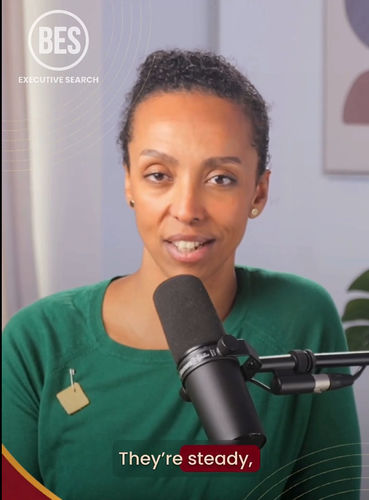
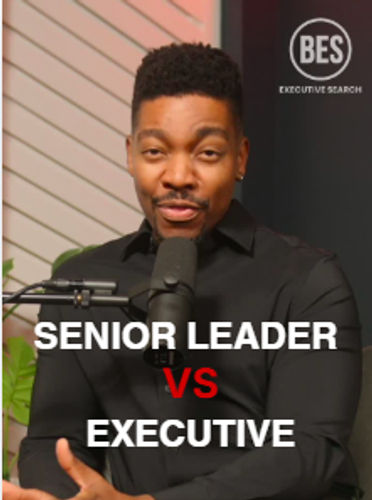
When interviewing for jobs at the executive level, confidence is expected—and so it’s no longer a differentiator. In this short, Jason Murray shares tips on what executive hiring committees are listening out for, which includes evidence of sound judgment and being able to navigate ambiguity.

Watch Why Confidence Stops Working at Executive Level
The Interview Mistake Strong Leaders Make

Watch on YouTube

The Interview Mistake Strong Leaders Make

When interviewing for executive roles, strong delivery is expected—so it’s no longer what sets you apart. In this short, Jason Murray shares a common mistake leaders make: answering like high performers instead of future peers.

Watch The Interview Mistake Strong Leaders Make
What Executive Presence Actually Is

Watch on YouTube

What Executive Presence Actually Is

In this short, Jason Murray breaks down why hiring committees look for calm, clarity, and restraint, and how presence often comes through in what you don’t say.

Watch What Executive Presence Actually Is

Sustainability/Stephanie La

Green AI: The Role of AI in Sustainability

Green AI emphasizes the importance of balancing innovation with environmental responsibility, addressing the significant environmental and ethical challenges posed by AI development, such as high carbon emissions, energy consumption, and data privacy concerns. While AI offers transformative benefits, including climate change prediction, pollution monitoring, and public health insights, its rapid advancement often prioritizes speed over sustainability. By adopting Green AI practices—such as energy-efficient algorithms, renewable energy sources, and sustainable development goals—organizations can reduce their environmental impact, align with sustainability objectives, and foster long-term growth while contributing to a more sustainable and equitable future.

Learn more
Learn more about Green AI: The Role of AI in Sustainability

Leadership/Melissa Sumnauth

The Importance of Pronouncing a Name: An Act of Inclusive Leadership

Names are not just labels; they are powerful reflections of identity, culture, and history. In this article, Melissa Sumnauth explores the significance of correct name pronunciation in leadership and organizational culture. Drawing on her experience in executive coaching, executive search, facilitation, and people & culture she illustrates how mispronunciation can function as a microaggression and a barrier to inclusion, while intentional effort to say names correctly fosters dignity, belonging, and trust. With practical tools and a call to action for leaders, this article reframes name pronunciation as a vital practice in advancing equity and respectful engagement.

Learn more
Learn more about The Importance of Pronouncing a Name: An Act of Inclusive Leadership